
What Does a Purple Lightsaber Mean? The Story Behind Star Wars' Rarest Blade Color
The purple lightsaber is the most intentional color in Star Wars -- and the least planned. It exists because Samuel L. Jackson wanted to spot himself in the Geonosis arena battle and asked George Lucas for his favorite color. Lucas said yes, and what started as a simple on-set request became one of the deepest pieces of lightsaber lore in the franchise. The meaning that grew around it -- a blade balanced between the blue of the Jedi and the red of the Sith -- perfectly matches the character who carries it: Mace Windu, the only Jedi Master who channeled the dark side without falling to it.
The Real Reason the Purple Lightsaber Exists
During the filming of Attack of the Clones (2002), George Lucas was orchestrating the Battle of Geonosis -- a scene with dozens of Jedi fighting in a dusty arena. Samuel L. Jackson, playing Mace Windu, looked at the sea of blue and green blades and had a practical concern: "How am I supposed to find myself in this?" He picked up the phone, called Lucas, and asked point-blank: "You think maybe I can get a purple lightsaber?"
Lucas initially pushed back. His rule at the time was simple: Jedi get blue or green. Sith get red. That was it. But Jackson, who had already been told by Lucas that Mace Windu was "the second baddest Jedi in the universe" (behind only Yoda), was insistent. Purple was his favorite color. He wanted to stand out. Lucas relented.
And that's how the most lore-heavy lightsaber color in Star Wars was born -- not from a writer's room or a franchise bible, but from an actor wanting to see himself on screen.
What Purple Means In-Universe -- Balance Between Light and Dark
Once the purple blade existed, the Star Wars universe built meaning around it. The interpretation that stuck, across both Legends and current canon, is that purple sits between blue (the light side) and red (the dark side). It's the color of a Force user who understands and even taps into darkness, but does not succumb to it.
This isn't just aesthetic. Mace Windu was the creator and sole master of Form VII: Vaapad -- the most aggressive, dangerous lightsaber combat form ever developed. Vaapad requires the wielder to channel their own inner darkness, to enjoy the fight, to let the thrill of combat flow through them. It's a technique so close to the dark side that every other Jedi who attempted to learn it either failed or fell. Windu alone mastered it and remained a servant of the light.
The purple blade reflects this perfectly. It's not a "good" color or a "bad" color. It's the color of someone who knows exactly where the line is -- and stands on it.
In Legends material, this was formalized: Jedi Guardians (combat-focused) carried blue blades. Jedi Consulars (Force and philosophy-focused) carried green. Jedi Sentinels (balanced skills) carried yellow. Purple was reserved for those who skirted the boundary between light and shadow -- a rare category that Windu essentially defined by himself.
In current Disney canon, kyber crystals are colorless until a Force user bonds with them. The color that emerges reflects the wielder's spirit and personality, not a predetermined class. But the community consensus is unchanged: Windu's amethyst blade came from his unique relationship with the Force -- a Jedi who intimately understood his inner darkness and chose, every day, to restrain it.
Not Just Windu -- Every Jedi Who Has Wielded Purple
Mace Windu is the face of the purple lightsaber, but he's not the only one.
Darth Revan (Legends) is arguably the second most famous purple blade wielder. Revan's story is the ultimate expression of what the color represents -- a Jedi who fell to the Sith, became a Dark Lord, was redeemed, and spent the rest of their life walking the path between. Revan often carried both a purple and a red lightsaber, a literal dual-wielding of their conflicted nature.
Vernestra Rwoh (Canon -- High Republic) is a Jedi prodigy who achieved the rank of Master at 15 and carried a purple lightsaber that could transform into a lightwhip. Her era, centuries before the prequels, shows that purple blades were more common when the Jedi Order was less rigid in its doctrine.
Jaina Solo and Kyp Durron (Legends) also carried purple at different points. Jaina, like Windu, was a fighter who wrestled with darkness -- in her case, the shadow of her fallen brother Jacen (Darth Caedus).
The pattern is consistent: purple goes to the ones who could have fallen but didn't. It's not a mark of danger. It's a mark of self-mastery over danger.
Purple Lightsabers in the Real World -- What Buyers Should Know
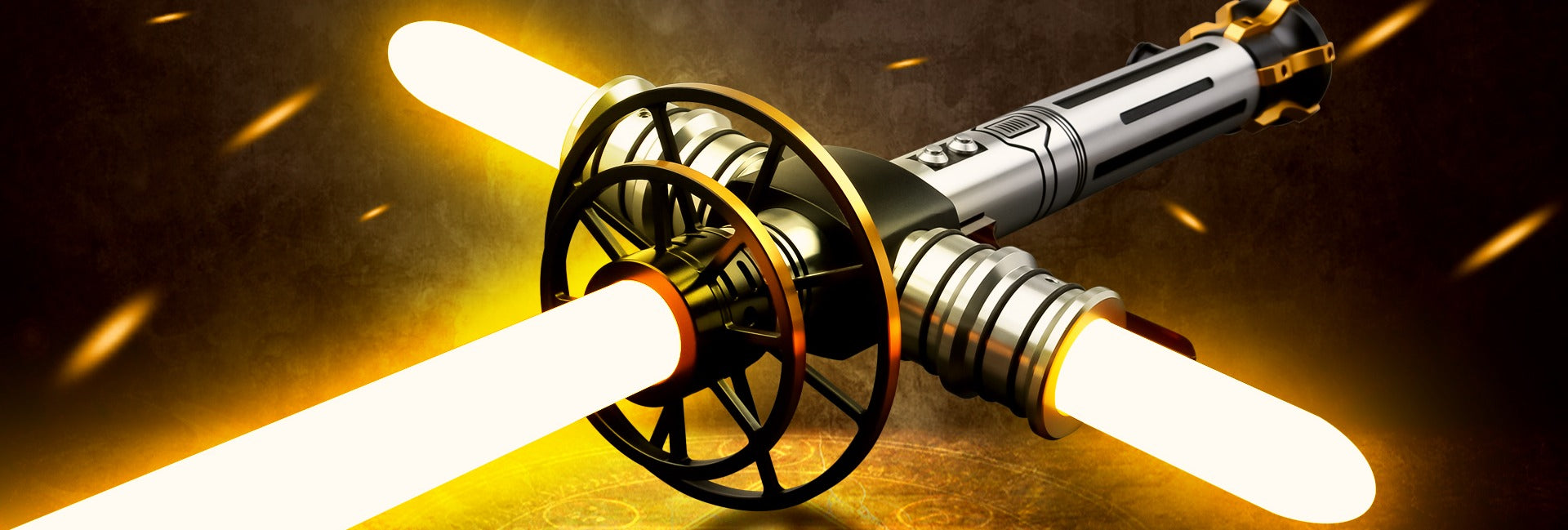
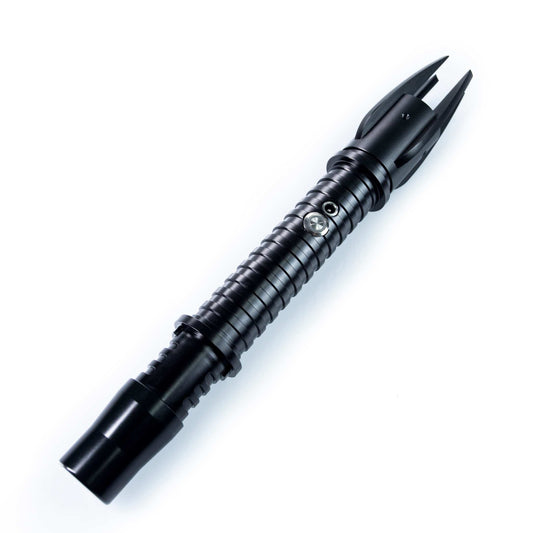
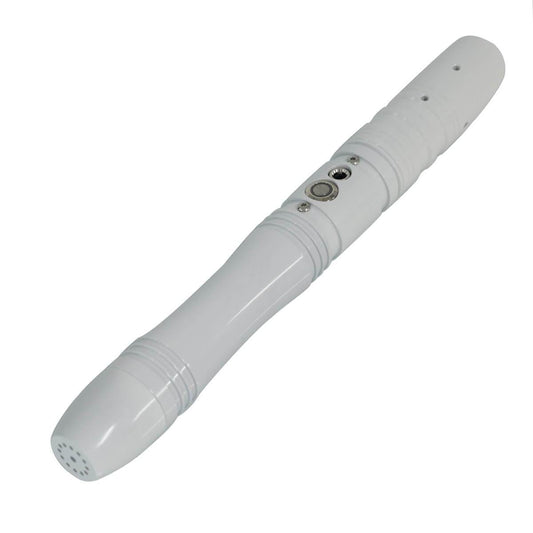
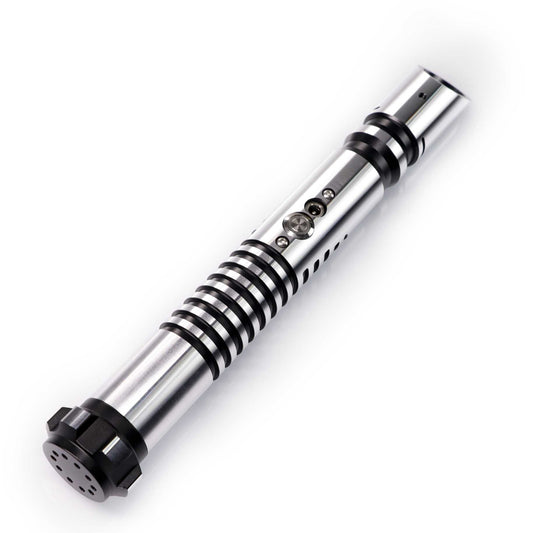
If you're buying a purple lightsaber for cosplay, dueling, or display, the blade color comes from the electronics, not the kyber crystal. Here's what matters:
RGB Baselit sabers can produce purple by mixing red and blue LEDs in the hilt. The result is a solid, even blade color -- good for photos and dueling, but without the nuanced shading of a Neopixel blade.
Neopixel (Xenopixel/Proffie) sabers render purple with far more depth. Because each pixel in the blade strip can be individually colored, a Neopixel purple blade can have a white-hot core with purple edges -- the same look as the movie blades. On a Proffie board, you can program the exact shade of purple you want, from deep violet to pale amethyst.
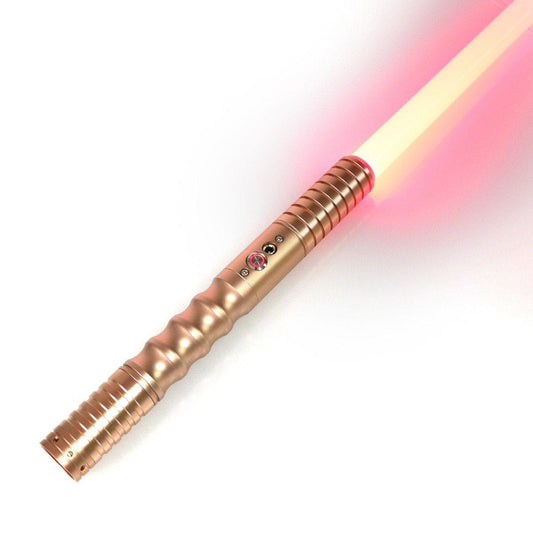
The hilt matters too. Mace Windu's hilt is distinctive -- gold electrum plating (reserved for Jedi Council members) with a ribbed grip. ISABER carries character-accurate replicas if you want the on-screen look. But any hilt can produce a purple blade with the right electronics. An exposed crystal chamber hilt like the Aurelius, set to purple, makes the crystal glow violet through the cutout -- one of the most photogenic configurations you can set up.
Why the Purple Lightsaber Endures
The purple lightsaber could have been a throwaway gimmick -- an actor's vanity request that the lore quietly ignored. Instead, it became one of the richest pieces of lightsaber mythology because it happened to land on the one character whose entire philosophy matched what the color would later come to mean.
Blue and green are the standard. Red is the enemy. Purple is the question: what if someone could walk between them?
That's why it remains the most-asked-about blade color on forums, the most popular custom saber color after blue and red, and the one color that every lightsaber manufacturer includes in their default palette. It's not just a color. It's a character statement.