
Single vs Double-Bladed Lightsaber: What Darth Maul Knew That Most Duelists Don't
When Darth Maul ignited both ends of his lightsaber in The Phantom Menace, the audience gasped. Not because it was a new weapon — double-bladed lightsabers had appeared in Star Wars comics and games before. But because of how Maul moved with it. The fluid spins. The one-handed strikes. The way the second blade wasn't just an extra weapon but an extension of his body's rotational momentum. He made a 72-inch staff look like a natural extension of his arms.
Then you pick one up yourself and realize: Maul was doing something incredibly difficult. The double-bladed lightsaber is the hardest configuration to master. Harder than a single saber. Harder than dual-wielding. It's not twice the weapon — it's a completely different weapon that happens to have two blades. Here's what you need to know before you buy one.
The Physics Problem Nobody Talks About
A single-bladed lightsaber is balanced near the hilt. The weight sits in your hand, the blade extends outward, and you control the tip with wrist and forearm movements. It's intuitive. Most of us have swung a stick, a baseball bat, or a tennis racket — the single saber maps onto those instincts.
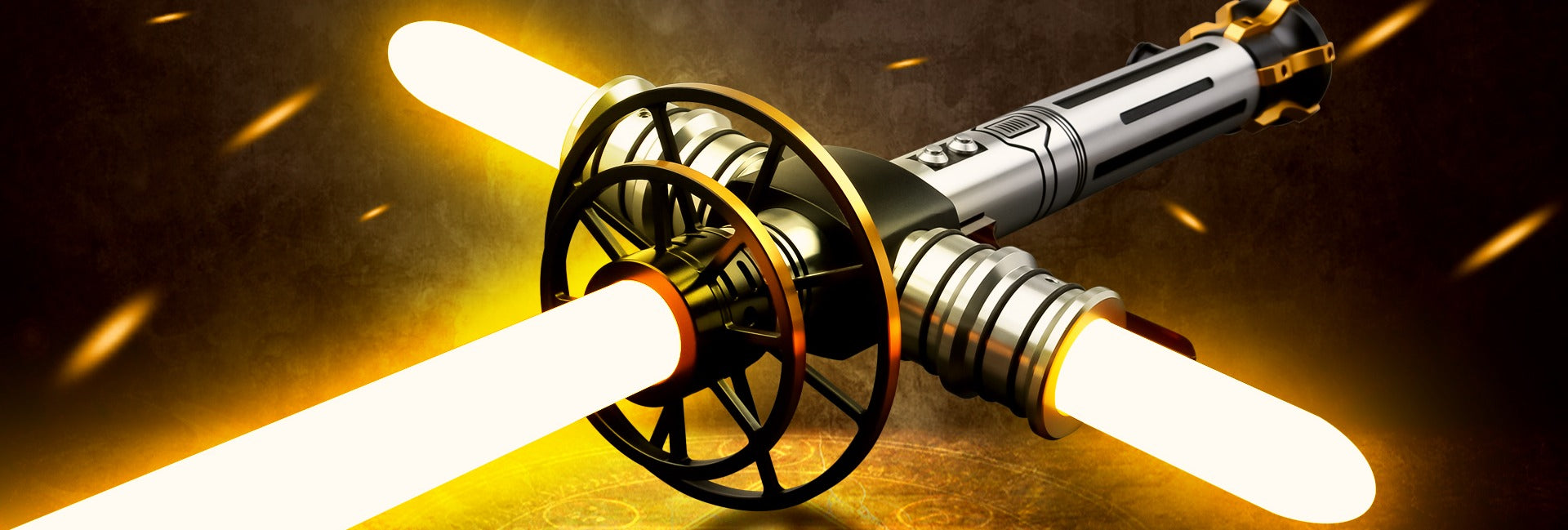
A double-bladed staff saber is balanced in the middle. Two blades, each 36 inches long, radiating from a central hilt. The center of gravity sits at the coupler. This changes everything. When you swing one end, the other end moves in the opposite direction with equal force. Momentum that would send a single blade through a clean arc now pulls the opposite blade through its own arc. You're not controlling one tip — you're managing two tips connected by a rigid bar. The conservation of angular momentum is both your best friend and your worst enemy.
Think of it like this: a single saber is a sword. A staff saber is a polearm. The grip, the stance, the footwork, the strike patterns — they're all different. If you try to fight with a staff saber using single-saber techniques, you'll hit yourself with the back blade. Probably in the face. It happens. The dueling community has the videos to prove it.
Where the Double-Bladed Saber Actually Excels
Once you adapt to the physics, the staff configuration gives you things a single saber can't:
Continuous rotational pressure. With a single saber, every strike has a recovery. You swing, you either connect or miss, and you have to bring the blade back. With a staff saber, the recovery of one blade is the windup for the other. Done right, there is no recovery pause — just a continuous flow of alternating strikes that forces your opponent to defend non-stop. This is what Maul does against Qui-Gon and Obi-Wan. He doesn't give them a beat to counterattack because the staff never stops moving.
Two threat vectors. Your opponent has to track both ends of your weapon simultaneously. A single saber has one obvious line of attack. A staff saber has two lines that change with every rotation. The cognitive load on the defender is higher. The split second they spend identifying which end is the threat is the split second you need to land the other end.
Blocking and striking from the same motion. Block with one blade, strike with the other, all in one continuous rotation. With a single saber, block and counter are two separate actions. With a staff, the rotation that intercepts their blade simultaneously brings your other blade around for the counter. It's the closest thing to simultaneous defense and offense that a melee weapon can achieve.
Where It Struggles — And Why Most Duelists Stick to a Single Saber
The staff saber's strengths are also its weaknesses. The same length that gives you reach and rotational momentum also makes you vulnerable in close quarters. Get inside the staff's effective range and the wielder can't bring either blade to bear without pulling back. A single-saber user who closes distance aggressively can negate the staff advantage entirely.
Environmental constraints are real. A 72-inch staff saber needs overhead clearance for spins and lateral space for strikes. In a convention hall with low ceilings and crowded walkways, you can't spin a staff safely. In a forest or a rocky outdoor shooting location, you'll catch a blade on a branch. Single sabers work anywhere. Staff sabers need space.
And the fatigue is no joke. Three to four pounds doesn't sound like much until you're spinning it for 10 minutes with your arms extended. The rotational inertia of a staff saber means every direction change requires more force than the equivalent move with a single saber. After a few minutes of full-speed spinning, your forearms are burning. Maul had Jedi training and Ray Park's martial arts background. Most of us don't.
The Verdict: Buy It If You're Willing to Learn It
If you want a lightsaber that looks incredible on a shelf, makes everyone at a convention stop and stare, and rewards months of dedicated practice with a fighting style that flows like nothing else — get the double-bladed staff. The Xenopixel version with scrolling ignition on both ends, hearing both blades ignite in sequence, is one of the most satisfying experiences in the hobby.
If you want a saber for casual spinning, occasional dueling with friends, and minimal learning curve — get a single saber. You'll spend more time enjoying it and less time learning not to hit yourself with it.
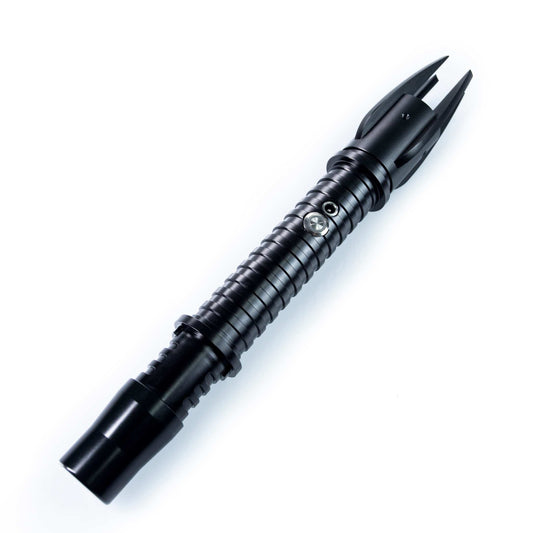
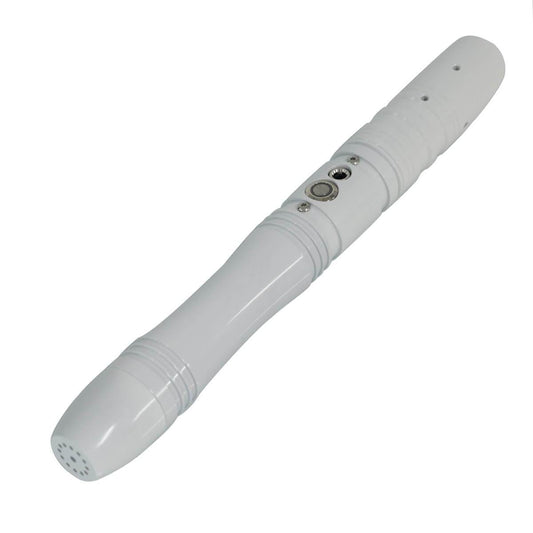
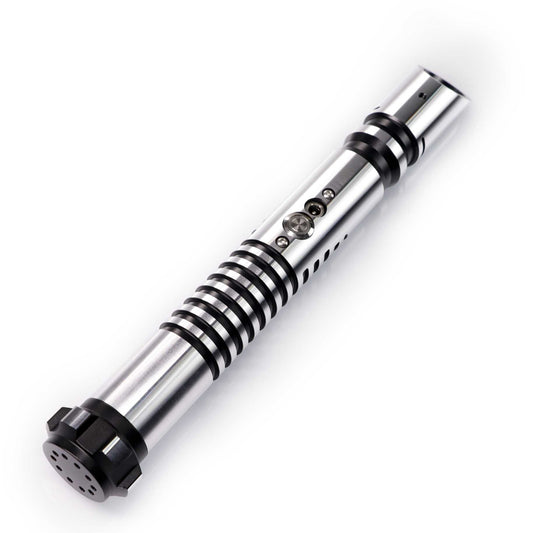
And if you want both? Get a staff saber that splits into two singles. Best of both worlds. Practice with the single blade until the movements are automatic, then connect the halves and add the second blade. The transition from single to staff is a natural progression. The transition from no saber experience directly to a staff is a shortcut to frustration.
Maul made it look easy. That was the point. The best martial artists always do.