
Cal Kestis Lightsaber: How It Evolved from Fallen Order to Survivor
Cal Kestis' lightsaber is one of the most interesting designs in modern Star Wars — not because it's the most elegant or the most powerful, but because it tells a story just by looking at it. It's a lightsaber that's been broken, rebuilt, and scavenged together from whatever parts Cal could find. That's rare in the Star Wars universe, where most sabers look like they came off a production line.
The Fallen Order Design: Scavenged and Personal
When we first see Cal's lightsaber in Jedi: Fallen Order, it's not a pristine weapon from a Jedi temple. It's a reconstruction. Cal has been in hiding since Order 66, and his original lightsaber is gone. The new one is built from spare parts — an emitter here, a grip section there, held together by what looks like scrap metal and tape.
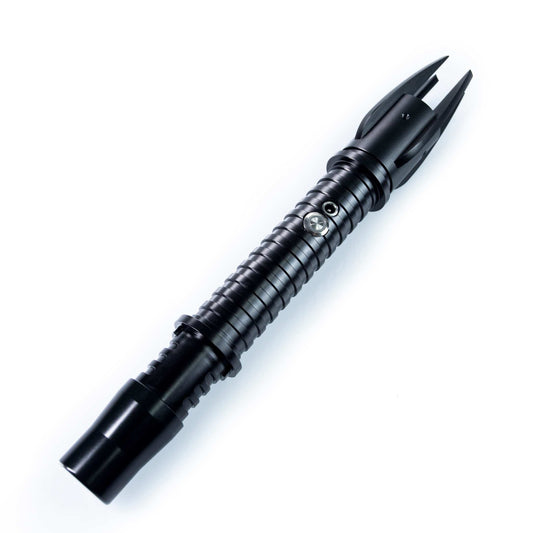
The emitter is shrouded, with twin fins that protect the blade retention area. The body is knurled for grip, with bare metal showing through. It looks used. It looks real.
This was a deliberate design choice by Respawn Entertainment. They wanted Cal's lightsaber to reflect his journey — a Jedi who survived the purge, went into hiding, and is now rebuilding himself just as he rebuilt his weapon.
The Survivor Upgrade: Refined but Still Rough
By Jedi: Survivor, Cal has grown. He's more confident, more skilled, and his lightsaber reflects that. The basic design language is the same — shrouded emitter, knurled grip — but the execution is cleaner. The parts fit together better. The finish is more intentional.
In Fallen Order, the hilt has visible seams and rough transitions. In Survivor, those transitions are smoother. The emitter shroud is more refined. Cal had time. He found better components. He learned to craft better. His lightsaber grew up with him.
What Makes It Unique
Most Star Wars lightsabers fall into two camps: the clean, production-line look of the prequel Jedi (Obi-Wan, Anakin, Mace Windu) or the dark industrial look of the Sith (Vader, Maul, Kylo Ren). Cal's saber sits in a third category — the survivor's weapon.
- Shrouded emitter — Twin-fin shroud protects retention screws and gives a distinctive profile
- Resonance chamber pommel — Hollow pommel amplifies sound, a detail real saber makers replicate
- Knurled grip — Machined texture for secure handling, not a ceremonial piece
- Visible wear — Bare aluminum shows scratches and dings. It's a weapon that gets used.
The Saber as a Storytelling Device
What makes Cal's lightsaber interesting is what it represents. In Fallen Order, getting your lightsaber back is a major story beat. In Survivor, choosing to modify it shows character growth. When Cal switches stances, his saber physically reconfigures — the parts split and reconnect.
Compare this to most Star Wars characters, whose lightsabers are static props. Luke's never changes. Vader's is the same for 20 years. But Cal's evolves, breaks, gets repaired, and evolves again.
For Cosplayers and Collectors
Key details to look for in a Cal Kestis inspired saber:
- Shrouded emitter with fins — the most recognizable feature
- Knurled or textured grip — bare metal, not rubber
- Resonance chamber pommel — hollow, not solid
- Weathered finish — bare aluminum with character
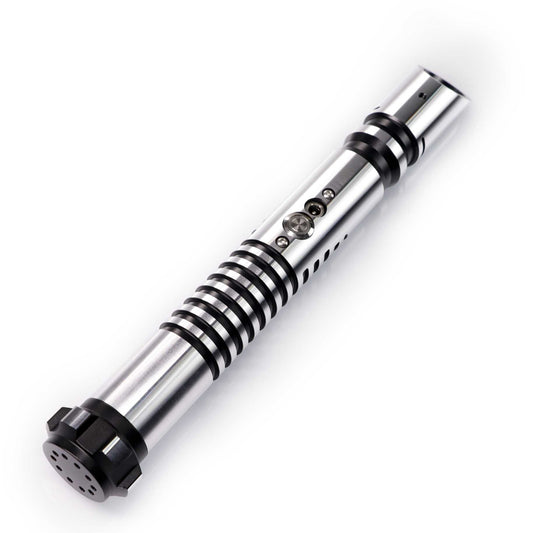
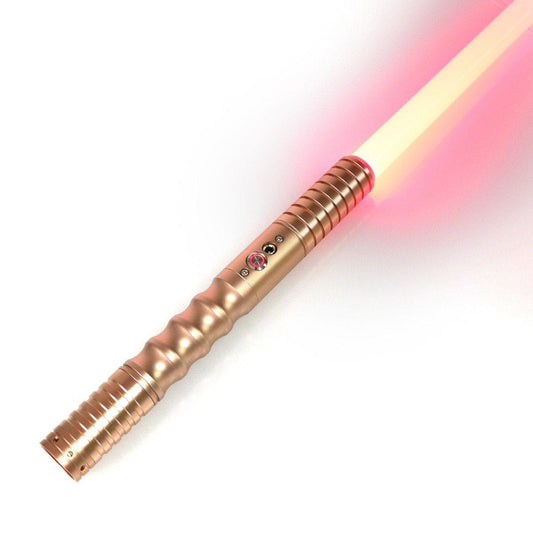
The ISABER Cal Lightsaber V1 captures all of these details. High-gloss emitter, bare aluminum knurled grip, and resonance chamber pommel are faithful to the game design.